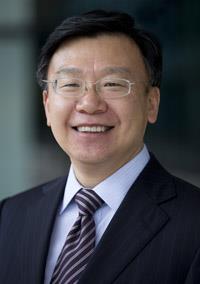
Today I am honored to deliver a speech on the impact of COVID-19 on youth and the actions WHO and GYLA take in response to the crisis.
Impact of COVID-19 on Youth
Since 2020, we have seen the COVID-19 global health emergency and its economic and social impacts which have disrupted nearly all aspects of life for all groups in society. People of different ages, however, are experiencing its effects in different ways. Young people are especially vulnerable group, suffering considerable risks that the COVID-19 poses in the fields of education, employment, mental health, and disposable income. Moreover, while youth and future generations will shoulder much of the long-term economic and social consequences of the crisis, their well-being may be superseded by short-term economic and equity considerations.
According to the Global Survey on Youth and COVID-19 conducted by the youth team of the International Labour Organization (ILO) in 2020, aimed to capture the immediate effects of the pandemic on the lives of young people (aged 18–29) with regards to employment,education, mental well-being, rights and social activism, the impact of the pandemic on young people is systematic, deep and disproportionate. It has been particularly hard on young women and younger youth in lower-income countries.Young people are concerned about the future and their place within it. Of the young people who were either studying or combining study and work before the onset of the crisis, three-quarters experienced school closures, yet not all were able to transition into online and distance learning.
The pandemic is also inflicting a heavy toll on young workers, destroying their employment and undermining their career prospects. One in six young people (17 per- cent) who were employed before the outbreak, stopped working altogether, most notably younger workers aged 18-24,and those in clerical support, services, sales, crafts, and related trades.Working hours among employed youth fell by nearly a quarter (i.e., by an average of two hours a day) and two out of five young people (42 percent) reported a reduction in their income. The findings of the Global Survey show that COVID-19 left one in eight young people (13 percent) without any access to courses,teaching, or training; a situation particularly acute among youth in lower-income countries and one that serves to underline the sharp digital divides that exist between regions. Despite the best efforts of schools and training institutions to provide continuity through online delivery, 65 percent of young people reported having learnt less since the pandemic began, 51 percent believe their education will be delayed, and 9 percent feared their education would suffer and might even fail.[1]
WHO and GYLA: In Response To COVID-19
In times of pandemic crisis, youth health and development have become one of the top priorities of WHO. Therefore, WHO has set up Youth Council in December 2020 and launched a new initiative on Global Youth Mobilization for Generation Disrupted in an alliance with the world’s six largest youth movements and organizations in December 2020. The leadership of the WHO, Big 6 (Young Men’s Christian Association, YMCA; World Young Women’s Christian Association, YWCA; World Organization of the Scout Movement; World Association of Girl Guides and Girl Scouts; International Federation of Red Cross and Red Crescent Societies, IFRC; and The Duke of Edinburgh’s International Award), and youth organizations around the world are calling on governments, businesses and policymakers to back the Global Youth Mobilization effort and commit to investing in the future of young people. These measures will directly support young people engaged at the grassroots level to tackle some of the most pressing health and societal challenges resulting from the pandemic.
I recall that since 2018, WHO has started a close collaboration with GYLA thanks to Ms. Dorine van der Wal’s coordination and efforts. I was also very pleased to meet over 200 GYLA participants and had a very pleasant discussion with the GYLA dream team during the visit to WHO in August 2019. I am also pleased to know that many of my colleagues have contributed a lot to the growth of GYLA over the past years, for example, Ms.Dorine Van der Wal, Dr. David Nabarro, Ms. Katherine DeL and, Dr. Gaya Gamhewage,Dr. Jun Xing, and Mr. Hans Willmann. I’d like to thank all of them for their support and efforts.
I know that GYLA is a very successful and influential brand program for young people. It is a unique platform built for young people to learn from global successful leaders, and exchange information and knowledge with their peers. GYLA has inspired and empowered many young people to engage in the achievement of the UN 2030 Agenda for Sustainable Development since its foundation. I believe that in times of pandemic crisis,GYLA will play a more important role in supporting and amplifying youth voices and actions by boosting the quality and delivery of different programs and activities, and outreaching and helping more young people to mitigate the negative impact of the pandemic, particularly in the developing countries.
I am hoping that GYLA will actively join the powerful global movement with WHO and other youth organizations to mobilize and empower youth worldwide to be the driving force of the recovery to COVID-19 because joining forces with WHO and other youth organizations in the world will provide a unique opportunity for GYLA to learn from other youth organizations and also engage other youth organizations and young groups in other countries where they are not able to access learning and training opportunities and resources.
Last, but not least, I sincerely wish a grand success of the GYLA Summer Programme, and I wish all of you a safe and pleasant summer vacation!